2026-10-24 ·
Step By Step Attic Inspection For Rancho Palos Verdes Homes Built Before 1990
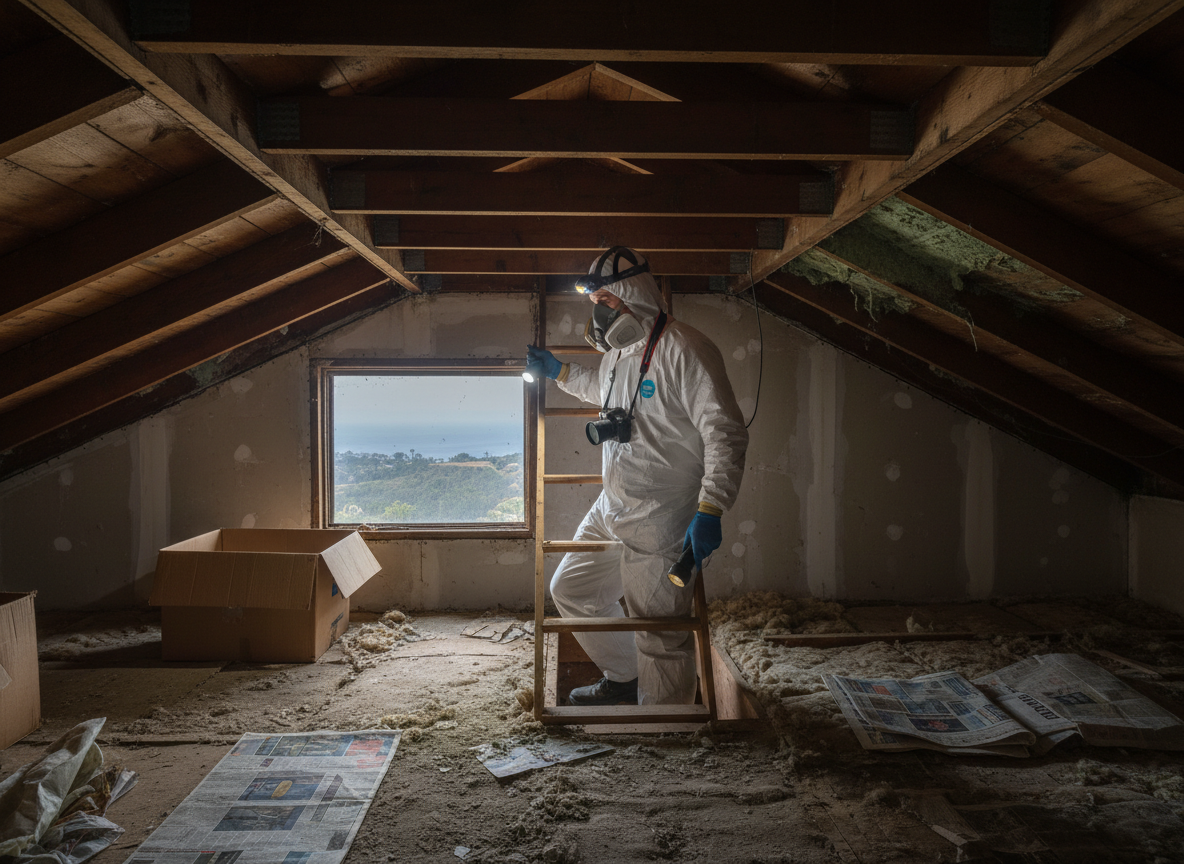
Homes built before 1990 in Rancho Palos Verdes typically require a five-step attic inspection process that begins with exterior access checks and ends with targeted air sampling when moisture readings exceed 16 percent. Older roof decks in neighborhoods such as Seaview and Portuguese Bend frequently trap condensation because Pacific Ocean breezes raise relative humidity even during mild Mediterranean conditions. Inspectors start by confirming safe ladder placement on the south-facing slopes common near Point Vicente Lighthouse before entering the space.
Preparing for the Inspection
Gather a moisture meter, headlamp, respirator, and camera before climbing into any pre-1990 attic in Rancho Palos Verdes. These homes often feature original plywood decking and kraft-faced fiberglass batts that degrade faster under the salt-laden air drifting from Abalone Cove Shoreline Park. Clear debris from the access hatch located in hallways or closets, then test the pull-down ladder for stability on the sloped lots typical along the Rolling Hills Estates border. Document existing insulation depth and any visible gaps around plumbing vents that serve bathrooms added during the 1970s and 1980s. Note the direction of prevailing breezes entering through gable vents near Terranea Resort, as these paths can carry spores from nearby coastal bluffs into the attic. Wear protective gear and work during daylight to avoid disturbing wildlife common in Los Verdes Golf Course-adjacent properties.
Checking for Visible Mold and Water Damage
Scan roof sheathing, rafters, and collar ties for dark staining or fuzzy growth that appears after winter rains pool near valleys on older shake or composition roofs. In Portuguese Bend homes, check where hillside runoff meets the foundation because water can wick upward through stucco walls and into the attic space above second-floor ceilings. Measure moisture at multiple points along the north-facing slope, which receives less sun and stays damp longer due to ocean moderation. Photograph any delaminated plywood or rusted nails, especially near bathroom exhaust fans that were never vented to the exterior in homes constructed before 1990. Record the size and location of each affected area so follow-up testing can focus on the highest-risk zones without unnecessary disturbance.
Assessing Insulation and Ventilation
Measure insulation depth against the 8–12 inch standard still found in many pre-1990 Rancho Palos Verdes attics; thinner layers allow temperature swings that promote condensation when ocean breezes cool the roof deck at night. Look for compressed or missing batts around recessed lights and bathroom fans, common upgrade points in homes near Los Verdes Golf Course. Verify that ridge and soffit vents remain unobstructed by insulation or debris blown in from nearby canyons. In Seaview properties, check for blocked turbine vents that once relied on steady coastal winds but now sit under newer solar panels. Note any bathroom or dryer ducts terminating inside the attic instead of through the roof, a frequent source of elevated humidity in older construction.
Testing for Hidden Mold
Use a moisture meter on sheathing and rafters even when surfaces appear dry, because hidden mold often grows behind insulation in homes built before modern vapor retarder requirements. Collect surface samples from stained areas and compare them with air samples taken near the access hatch and at opposite ends of the attic. In Rolling Hills Estates border homes, pay special attention to areas above kitchens where older range hoods may vent directly into the space. Compare readings against outdoor baselines collected from the driveway to determine whether indoor spore levels indicate an active source. When counts exceed typical coastal background levels, recommend attic mold testing and removal before insulation replacement begins.
When to Schedule Professional Follow-Up
Contact a local inspector if moisture readings remain above 16 percent after 48 hours of dry weather or if visible growth covers more than 10 square feet. Pre-1990 attics in Rancho Palos Verdes frequently require containment and HEPA filtration because spores can travel through shared wall cavities into living spaces below. Review findings against seasonal patterns documented in What To Expect When Scheduling Mold Testing After Heavy Winter Rains to decide whether immediate remediation or monitoring is appropriate. Homeowners near San Pedro or Palos Verdes Estates often schedule inspections during shoulder seasons when ocean breezes are steady but rainfall is low, allowing clearer identification of chronic leaks versus seasonal condensation.