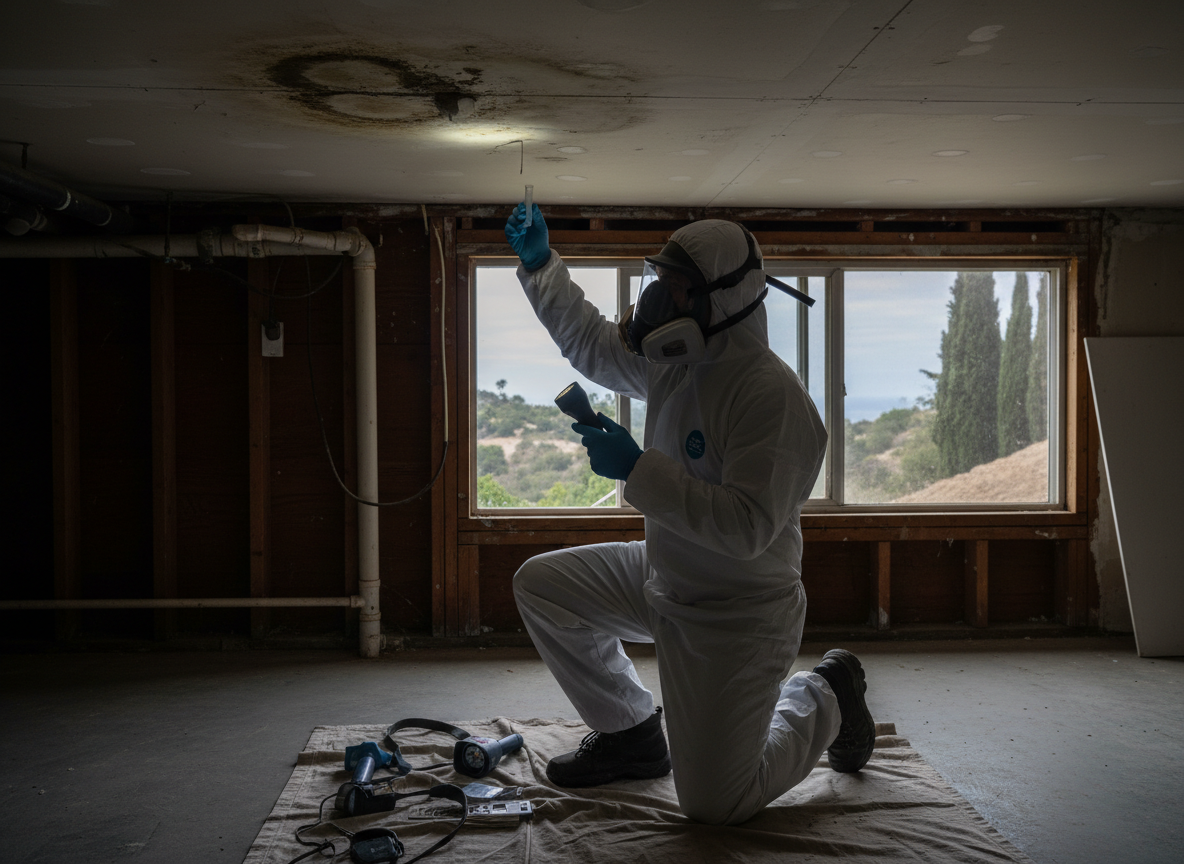
Rancho Palos Verdes sits on coastal bluffs where the mild Mediterranean climate meets Pacific Ocean breezes that often keep indoor humidity deceptively low during the day. Many homes in Portuguese Bend and along the Rolling Hills Estates border were built between the 1950s and 1970s with single-pane windows, unvented crawl spaces, and stucco that traps condensation once evening temperatures drop. A certified mold inspector checks behind these surfaces because visible growth rarely shows until drywall is opened.
Hillside properties near Point Vicente Lighthouse and Abalone Cove Shoreline Park experience soil creep and minor foundation shifts that crack stucco and allow wind-driven rain to enter wall cavities. Homes closer to Terranea Resort and Los Verdes Golf Course sit on flatter lots but still face irrigation overspray and poor grading that directs water toward slab edges. Inspectors use moisture meters and borescopes in these specific locations because standard visual checks miss the water that travels along rebar or under tile.
Los Angeles County building practices in older Rancho Palos Verdes neighborhoods often left minimal attic ventilation and unsealed plumbing penetrations. When ocean air meets cooler interior surfaces in winter, condensation forms inside wall cavities and under bathroom cabinets. A certified mold inspector documents these patterns with photos and readings so homeowners can see exactly where remediation crews will need to open walls.
Technician insight
In Rancho Palos Verdes, the thing that catches most people out with certified mold inspector is assuming ocean breezes keep everything dry. The real problem shows up in Portuguese Bend homes where evening condensation inside stucco walls and under tile stays hidden until we pull baseboards.
Hidden Growth Behind Stucco in Portuguese Bend
A homeowner noticed a musty smell after winter rains but saw no visible mold. We mapped elevated moisture along the north wall facing the ocean and found condensation trapped behind stucco. Targeted openings revealed growth along the sill plate. Removal and drying resolved the odor without opening the entire room.
How it works
- 1
Initial Assessment
Review property history and visible moisture sources at the address in Rancho Palos Verdes.
- 2
Moisture Mapping
Use meters and thermal imaging to locate hidden damp areas in walls, attics, and crawl spaces common to local hillside homes.
- 3
Air and Surface Sampling
Collect samples from Portuguese Bend and Seaview properties where ocean breezes mask ongoing humidity.
- 4
Report and Recommendations
Deliver findings with photos and locations so remediation can target the exact affected materials.
Pricing
Pricing varies by square footage, number of samples, and access difficulty in hillside terrain; upfront quotes provided before work begins.