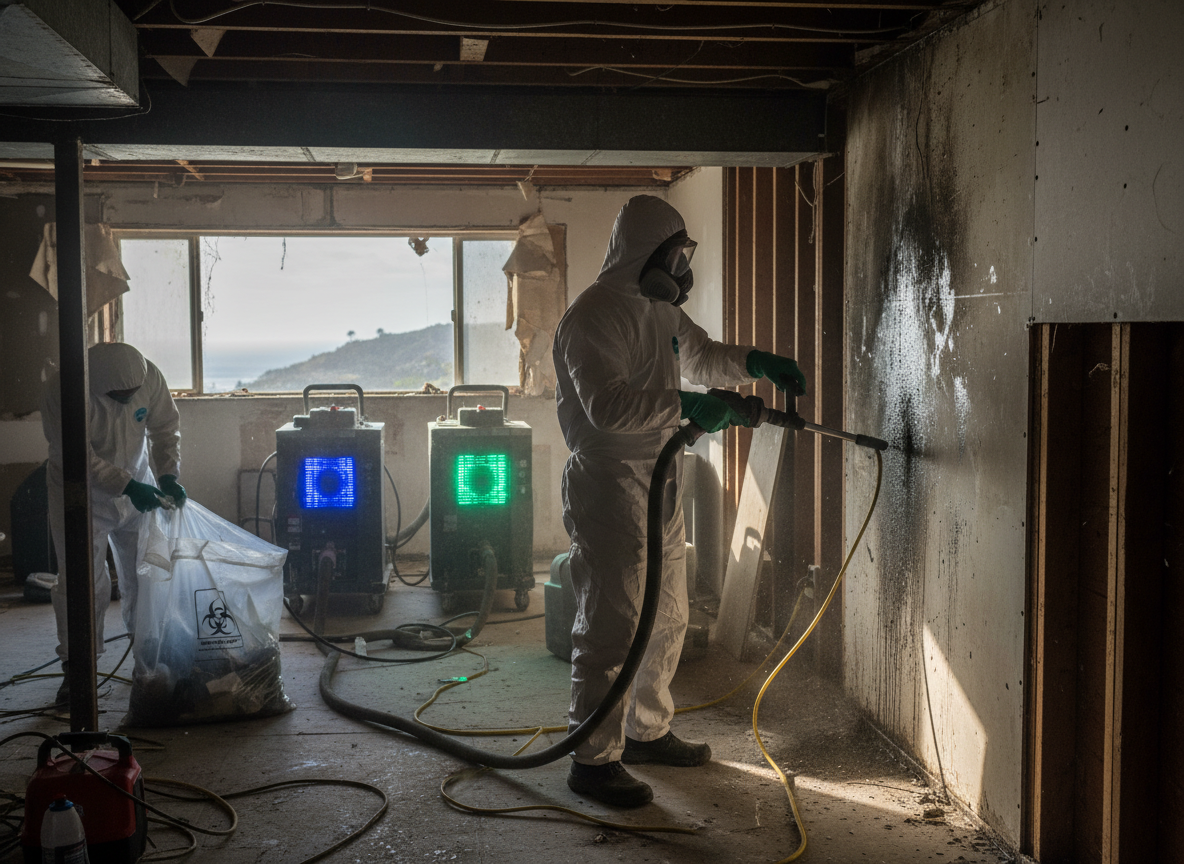
Rancho Palos Verdes homes built before 1970 often sit on clay-heavy slopes in Portuguese Bend and near the Rolling Hills Estates border. These properties feature slab-on-grade foundations or raised floors with limited ventilation. Pacific fog rolls in most mornings and lingers in crawlspaces and garages, raising surface moisture on drywall and subfloors even when indoor humidity stays moderate. Removing visible growth without addressing the hidden moisture behind baseboards or under Terranea-adjacent decks leads to rapid return.
Los Angeles County building codes require containment and negative air when disturbing more than ten square feet of mold-affected material. In Seaview and near Point Vicente Lighthouse, many single-story ranches have stucco exteriors that trap water at window sills after winter rains. Technicians must cut back drywall at least twelve inches past visible staining and use moisture meters on framing because the mild Mediterranean climate masks ongoing dampness. Failure to document moisture sources before drywall replacement violates inspection standards that county health officers reference during complaints.
Hilly terrain around Abalone Cove Shoreline Park and Los Verdes Golf Course creates drainage patterns that push water toward foundations during rare heavy rains. Homes on the San Pedro side of the peninsula frequently show mold along north-facing walls where ocean breezes deposit salt-laden moisture. Professional mold removal here includes HEPA vacuuming of HVAC returns because many systems pull air from garages and attics that collect condensation year-round.
Hidden Moisture Sources in Local Homes
Hillside lots in Portuguese Bend direct runoff under patios and into stem walls. Checking irrigation lines near the address at 31204 Palos Verdes Dr W often reveals the true source before any removal begins.
Technician insight
In Rancho Palos Verdes, the thing that catches most people out with professional mold removal is hidden moisture trapped behind stucco on north-facing walls. Ocean breezes keep the exterior looking dry while fog and poor drainage around Portuguese Bend lots push water into framing. Skipping the extra twelve inches of drywall removal almost always means the job comes back within a year.
Seaview Bathroom Wall After Winter Fog
Homeowner noticed black staining along the base of a hallway wall after several weeks of heavy morning fog. Inspection revealed elevated moisture in the exterior stucco and behind the baseboard on a north-facing elevation. Crew removed the lower two feet of drywall, treated the framing, and installed drying equipment for three days. Clearance testing passed and the wall was restored before any further growth occurred.
How it works
- 1
Site Assessment
Technicians inspect all accessible areas including crawlspaces and attics, using moisture meters and thermal imaging to map hidden dampness common in Rancho Palos Verdes hillside homes.
- 2
Containment Setup
Plastic barriers and negative air machines isolate the work zone to prevent spores from migrating into living spaces in older Seaview and Terranea-area properties.
- 3
Removal and Cleaning
Affected drywall, insulation and trim are removed, followed by HEPA vacuuming and antimicrobial treatment of framing and hard surfaces.
- 4
Drying and Verification
Dehumidifiers and air movers dry the structure, then post-remediation testing confirms moisture and spore levels meet clearance standards before reconstruction.
Pricing
Upfront quotes provided after on-site inspection; final cost depends on square footage, hidden damage extent, and drying time required.