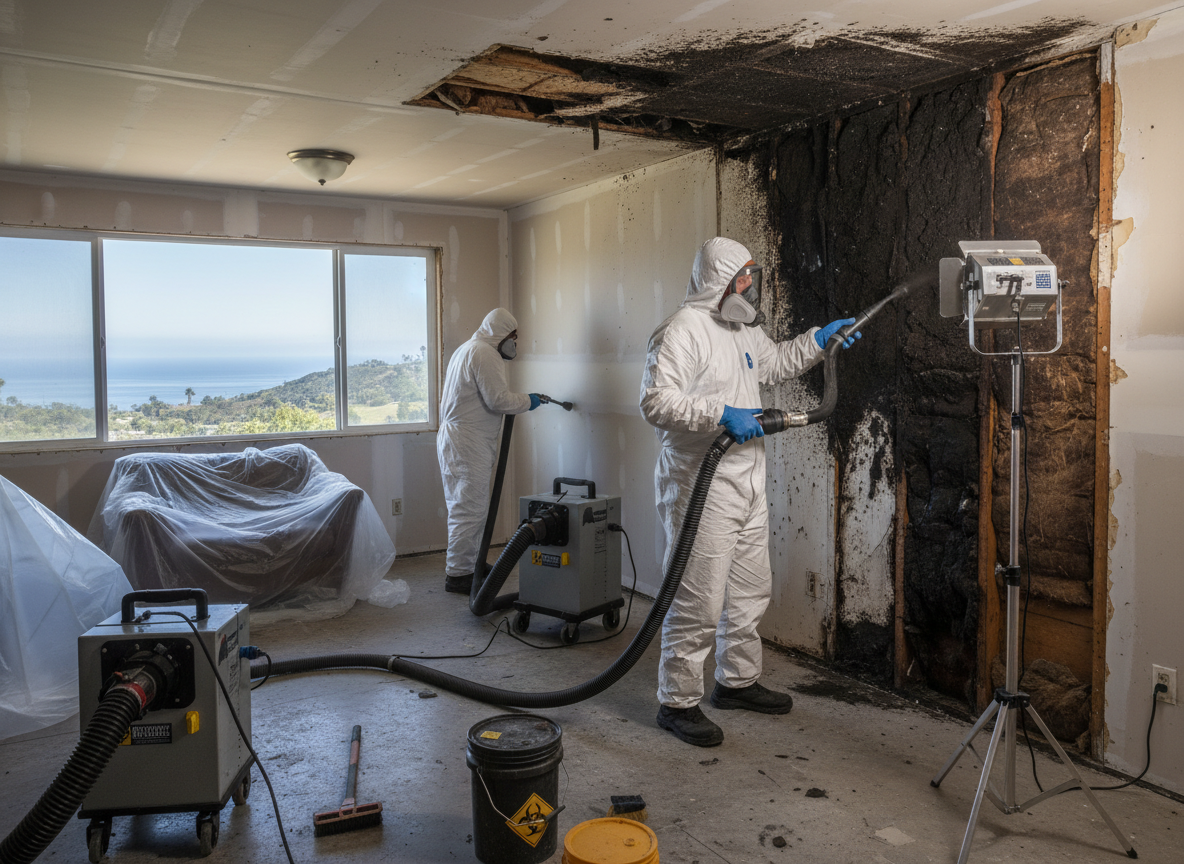
Rancho Palos Verdes sits in Los Angeles County with a mild Mediterranean climate kept in check by steady Pacific breezes. Those same breezes push humidity into crawl spaces and wall cavities of homes built from the 1950s onward, especially near Portuguese Bend and the Rolling Hills Estates border. When hidden mold growth begins, the musty smell travels through HVAC returns and travels along the coastal terrain, making standard cleaning insufficient. Odor removal mold requires locating the actual moisture source first, then applying oxidizers that reach behind plaster and under tile without disturbing the original structure.
Homes along Seaview and near Terranea Resort often feature stucco over wood framing that traps condensation from ocean air. After a rare heavy rain or irrigation overspray near Abalone Cove Shoreline Park, water migrates under slabs and into subfloors, feeding colonies that release volatile organic compounds. Effective odor removal mold work here means pulling baseboards, treating joists with non-toxic antimicrobials, and running negative-air machines long enough to pull smells from porous materials. Rushing the drying step in this climate leaves residual odor that returns within weeks once the marine layer moves back in.
San Pedro and Palos Verdes Estates border properties share similar hillside drainage patterns. When odor removal mold jobs reach these lots, technicians check French drains and weep holes around Los Verdes Golf Course properties because blocked paths force water against foundations. The process includes HEPA vacuuming of settled spores, sealing porous surfaces with encapsulants rated for coastal humidity, and confirming clearance through air sampling before any finishes are replaced.
Technician insight
In Rancho Palos Verdes the thing that catches most people out with odor removal mold is how the constant ocean breeze keeps feeding moisture into older plaster walls near Portuguese Bend even after the visible water is gone; homeowners often paint over the smell only to have it return the next marine layer.
Seaview Home Odor After Irrigation Leak
A Seaview residence noticed a persistent musty smell in the hallway after a sprinkler line leaked near the foundation. Inspection found mold growth under the subfloor and in the HVAC return. We contained the hallway, treated the joists and ductwork with oxidizers, and ran drying equipment for three days. Air samples cleared and the odor did not return once the marine air moved back in.
How it works
- 1
Initial Assessment
Walk through the property to trace odor paths from Portuguese Bend to Seaview, checking HVAC, attics, and slab edges for moisture intrusion.
- 2
Source Containment
Isolate affected zones with plastic barriers and negative air to keep spores from drifting into unaffected rooms common in Rancho Palos Verdes ranch homes.
- 3
Odor Neutralization
Apply hydroxyl generators and targeted oxidizers to break down VOCs in wall cavities and under flooring without harsh chemical residues.
- 4
Clearance and Drying
Run dehumidifiers calibrated for ocean-influenced air until moisture readings drop, then verify with third-party air sampling before reassembly.
Pricing
Cost depends on square footage treated, depth of odor penetration in older coastal construction, and whether HVAC cleaning is required.