Rancho Palos Verdes sits in Los Angeles County with a mild Mediterranean climate shaped by constant Pacific breezes that keep daytime temperatures moderate yet allow evening fog to linger in lower elevations like Portuguese Bend and near Abalone Cove Shoreline Park. These conditions drive hidden moisture into crawl spaces and behind stucco on homes built from the 1950s through the 1970s, especially along the Rolling Hills Estates border where slopes trap humidity. Affordable mold remediation here starts with moisture mapping rather than visible inspection alone because ocean air keeps surfaces cool enough for condensation even when indoor humidity reads acceptable.
Terrain plays a direct role in every job. Properties near Terranea Resort and Los Verdes Golf Course often sit on fill or have graded lots that direct roof runoff toward foundations, while Seaview homes face salt-laden air that corrodes vents and window frames. Technicians must account for these patterns when planning containment so spores do not travel through the single-story ranch layouts common in the area. Cutting corners on negative air pressure in these older builds quickly turns a small bathroom issue into attic contamination.
Local Moisture Patterns
Pacific breezes moderate heat but create repeated dew points inside wall cavities during shoulder seasons. Homes near Point Vicente Lighthouse experience more frequent fog intrusion than inland sections of Palos Verdes Estates, requiring longer drying times and targeted dehumidification in laundry rooms and under decks.
What Homeowners Often Miss
Many residents assume visible black spots on drywall are the full extent of growth. In reality, the combination of clay-heavy soil and older slab construction allows water to wick upward from the ground, feeding mold behind baseboards months after the initial leak.
Technician insight
In Rancho Palos Verdes, the thing that catches most people out with affordable mold remediation is the way ocean breezes keep crawl spaces under 1950s-70s homes damp even when the rest of the house feels dry. Portuguese Bend lots with their natural slope often route fog condensation straight to the foundation, so skipping a full under-house inspection usually means the job returns within a year.
Seaview Home After Winter Fog
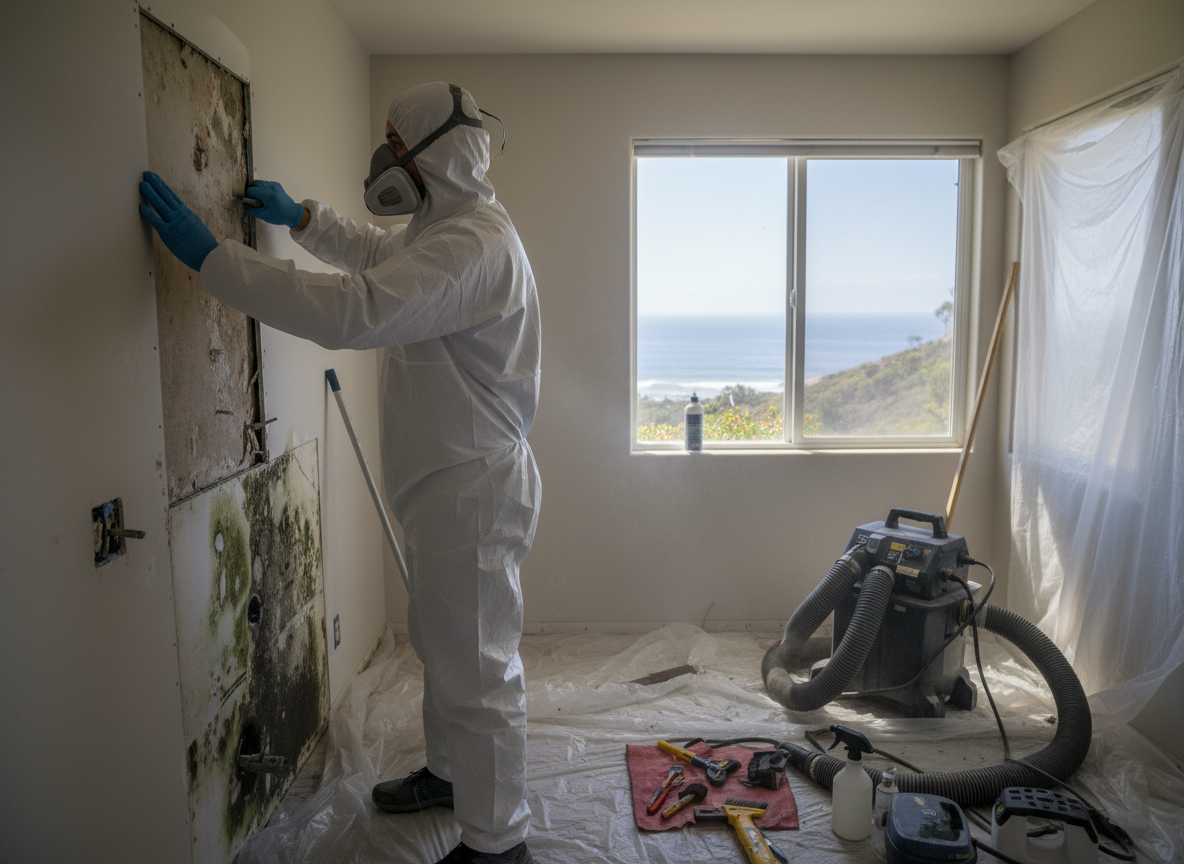
A homeowner in Seaview noticed musty odor in a hallway closet after weeks of marine layer. Inspection found active growth on the back of drywall where roof runoff had soaked the sill plate. Containment was set, the affected section removed, and the area dried with targeted equipment. Post-clearance testing confirmed levels returned to normal background before walls were closed.
How it works
- 1
Initial Assessment
Technician arrives within hours, uses moisture meters and thermal imaging on the specific property to locate hidden growth without demolition.
- 2
Containment Setup
Plastic barriers and negative air machines isolate the work zone to prevent cross-contamination through Rancho Palos Verdes single-story floor plans.
- 3
Removal and Cleaning
Affected materials are removed, surfaces treated with appropriate antimicrobials, and HVAC systems inspected if growth reached ductwork.
- 4
Drying and Verification
Industrial dehumidifiers run until readings meet industry dry standards, followed by post-remediation sampling before barriers come down.
Pricing
Upfront quotes after inspection, priced by square footage and access difficulty rather than flat rates.